Three chat windows. Three versions of true.
Most product leaders scaling AI hit the same wall: more models, more agents, more dashboards, and less clarity about what is true. Every surface thinks it is being helpful. Nobody can swear which system owns executive reporting, the CRM system of record, or the governance audit trail.
The failure mode is not weak intelligence. It is conflicting state, duplicate writes, and eroded trust in the system of record.
At enterprise scale I owned that problem directly: a 13-product AI and data portfolio across 100+ markets, $8M budget, 60+ team, systems governing $600M in annual spend. The blast radius was portfolio-wide. The question was always the same: which system owns this write today.
When I started building my operating model, I did not want another pile of AI tools. I wanted one system I could trust to run revenue, delivery, and operating cadence as scope grew. So I built an Operator Control Plane on one spine: a versioned skills library, 39 governed automations on an Agent Orchestration Layer, registry-led identity in a Knowledge Base, and an orchestration agent coordinating business and personal operations.
I run a live version of the same decision-rights problem today, at smaller scale. The diagram below is my stack, not a reference slide.
The diagnostic
The question teams ask is which model is best. The question that actually matters is which model owns this write today.
Without an ownership layer, every new capability feels like opening a second brain. Executive reports conflict. CRM and pipeline data drift. Governance audits double-run. Leadership attention goes to reconciliation instead of allocation.
This was not a tooling problem. It was a decision-rights problem. I still think about it the way I did in a portfolio org: register the workflow, assign one writer, separate execution from audit, and make evidence durable before you add capacity.
What I built to run the business
Named concept: Operator Control Plane. The ownership layer that assigns write authority across models, tools, and schedules.
Core rule: One Active Writer per task. If you are not the owner, you skip. No heroic double writes.
Three-layer separation:
- Registry & identity: agent registry, task registry, decisions, handoffs
- Agent Orchestration Layer: interactive ops surface, scheduled execution host
- Audit layer: read-only verification and render
Live business integrations under single-writer rules: CRM, calendar, email, meeting intelligence, research APIs, and source control feed the same spine without becoming parallel systems of record.
Registered execution surfaces: Orchestration, Agent Orchestration Layer, audit layer, and registered integrations each hold an explicit role, not a popularity contest.
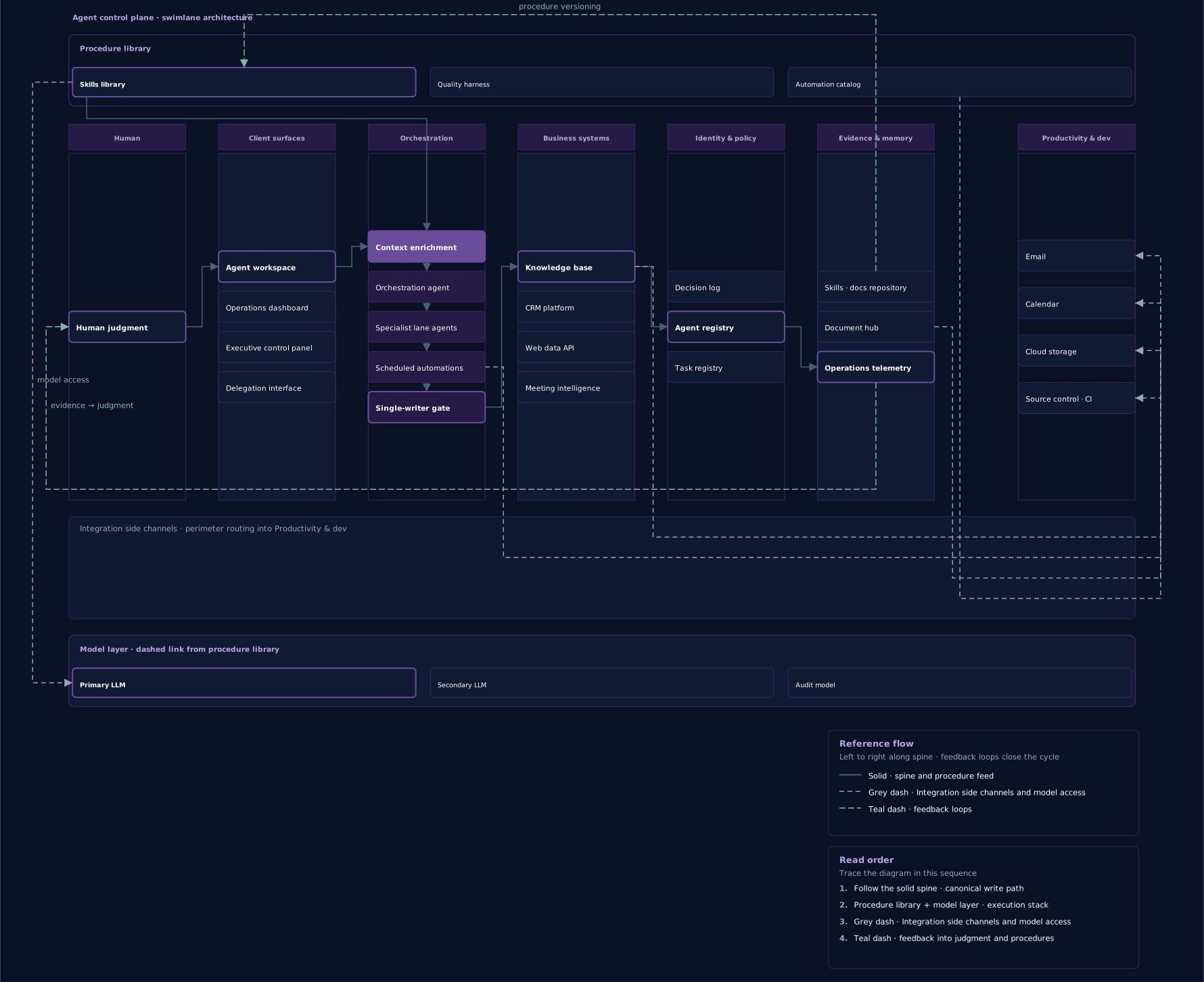
The swimlane diagram maps how the operating model actually runs: judgment up top, client surfaces and orchestration across the spine, business systems and registry in the middle, evidence and versioned procedures underneath, and registered integrations routed in from the perimeter.
What changed
| Topic | Outcome |
|---|---|
| The problem | Conflicting AI writes and eroded trust in the system of record |
| Forged at enterprise scale | Portfolio sprawl, unclear decision rights, and governance pressure across 100+ markets |
| Running today | Career pipeline and operating cadence on explicit decision rights |
| Throughput | Overnight automations produce executive reporting, delegation queue sweeps, and governance audit cycles |
| Trust | Adding a model feels like opening capacity, not opening a second brain |
| Scaling up | Register agents and tasks; do not add parallel brains |
The registry could be a Knowledge Base or Salesforce. Execution could be an Agent Orchestration Layer or an internal agent platform. Decision rights do not change: one writer per workflow, evidence on the record, audit separate from execution. I have made those calls at portfolio scale. This page shows them running on the operating model I use today.
Judgment is deciding what becomes true
Models are excellent at noise, drafts, options, and scans. Judgment is deciding what becomes true. The control plane protects judgment while scaling model capacity.
That is the difference between collecting AI tools and running an organization where decision rights are explicit.
Public architecture
Judgment stays human. The system carries the work.
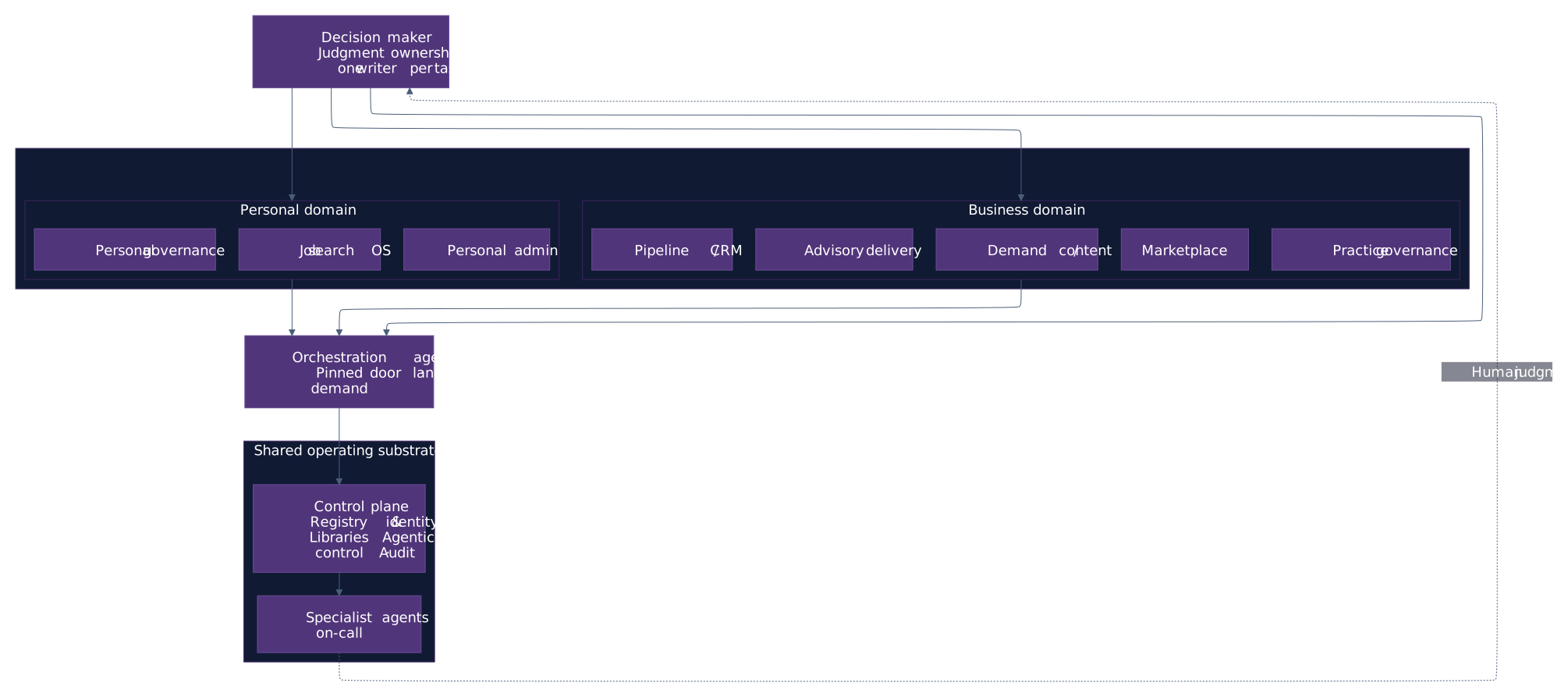
Control plane detail
Seven swimlanes, one spine, and the libraries that keep writes honest.
Product summary
This is the live stack I run today: orchestration and 39 governed automations on one spine, CRM and meeting intelligence in the business lane, Knowledge Base and evidence underneath, and registered integration side channels into email, calendar, and source control. The same decision-rights problem I managed across a 13-product portfolio, running here as executive reporting, CRM reconciliation, and governance audit cycles on one operating model.
To read the diagram, start with Reference flow in the lower-right panel, then follow the numbered read order directly below it.
Open full diagram One-glance view